
Japan Market Insights
Selling in Japan: Why Everyday Life Matters to Your Marketing
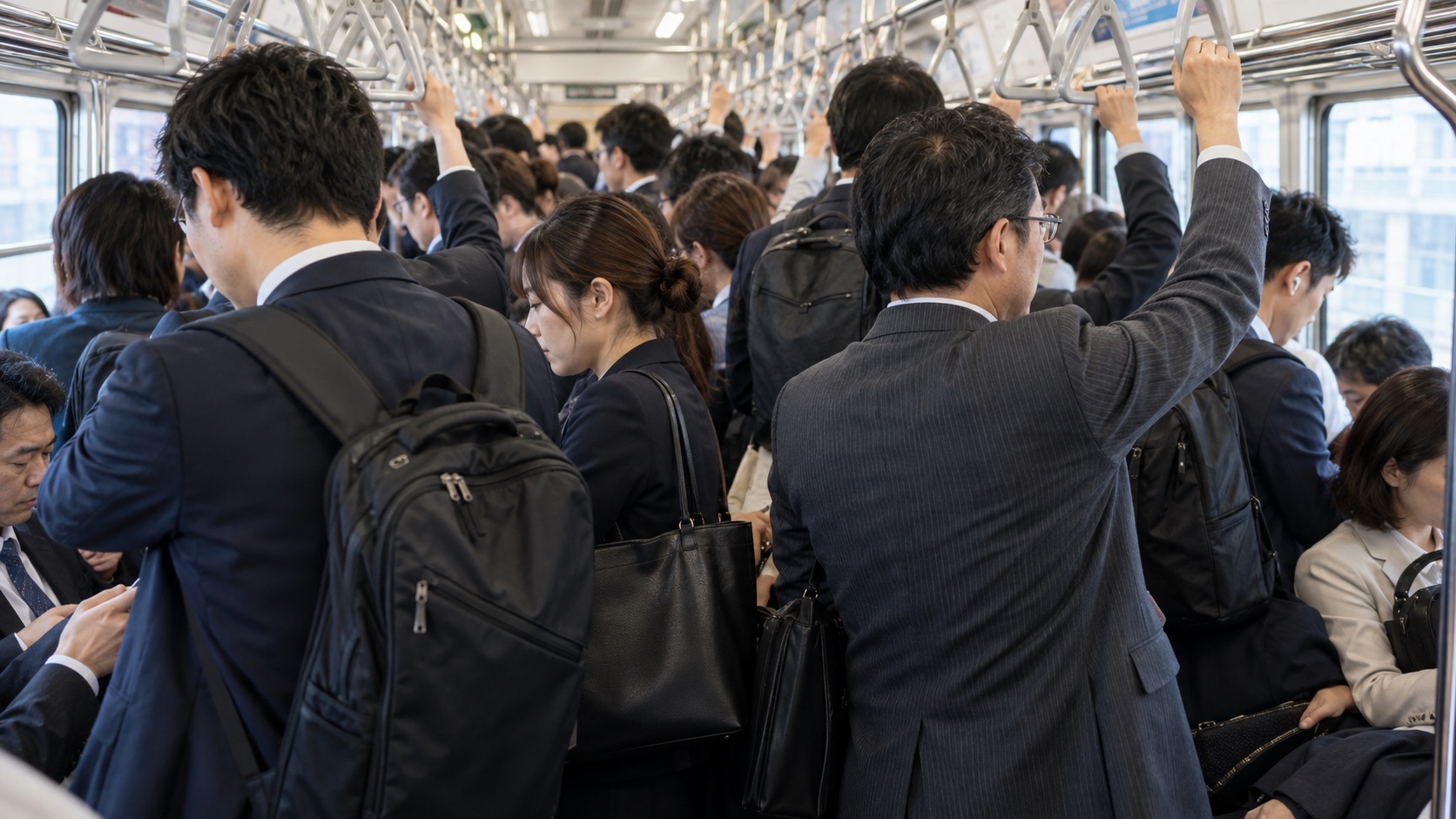
A crowded Japanese commuter train. Illustrative image generated with AI.
Before you translate your website or buy advertising in Japan, ask a more basic question: does your product fit the way your target customer actually lives? Commuting, the space available at home and small everyday inconveniences can change which benefits matter. They should influence what you show, explain and test.
I am Junko Adachi, founder and CEO of Anatano PR, a marketing and branding company in Japan. My background includes more than 10 years in marketing for European luxury brands in Japan and five years in the IT sector. In this article, I want to share a perspective that is easy to miss when you plan a Japanese launch from overseas: the customer’s ordinary day.
These examples are especially relevant to consumer products. They are starting points for research, not a description of every Japanese person. A commuter in central Tokyo, a family in a regional city and a customer who drives to work may have very different needs.
1. What happens between home and work?
Imagine a customer carrying your bag on a crowded train in Tokyo. They may also walk to the station, use stairs and change trains. A large bag that works comfortably in a car can become inconvenient in this setting.
Now consider the details: can they reach their phone without opening the entire bag? Can they carry it close to their body? Does it feel heavy after a walk? If they turn it to the front on a busy train, is it still comfortable? These questions can reveal a useful selling point—or a practical weakness—that a studio product photograph cannot show.
The marketing lesson is to show the product in a relevant situation. For a bag, demonstrate its depth, weight, access and fit on the body. Instead of relying only on a general claim such as “designed for modern life,” explain the particular task it makes easier.
Choose the situation to match your segment. Train commuting is relevant to many urban customers, but it should not become an assumption about the whole country.
2. Will the product fit into the customer’s home?
For a kitchen appliance, the question is not simply whether the product fits on a counter. Is there room to open its lid? Where does the cable go? Can the customer remove and wash the parts? Where will the appliance be stored when it is not in use?
This matters when customers have limited counter or storage space. A product that looks compact in isolation may be awkward in the actual location where it will be used. Conversely, a design that solves a storage problem may have a strong benefit that your current marketing barely mentions.
Make these decisions easier on the Japanese product page. Show dimensions in centimetres, give a sense of scale and demonstrate the space needed for normal use. A photograph with the lid open may answer a more important question than another attractive close-up.
Do not assume that every Japanese home is small. Identify the homes and households you are targeting, then test whether your presentation answers their practical questions.
3. What does “easy to use” mean next to the alternatives?
Customers judge convenience against products they already know. Opening a package, pressing a button, cleaning a component or putting something away may look like a minor detail from a brand’s point of view. For the person doing it every day, that detail can become the product experience.
A useful historical example is TOTO. The company describes importing a US-made washing toilet seat in 1964, then developing its own WASHLET, launched in 1980, after work on issues including water temperature and comfort. It illustrates how adapting a concept to everyday use can create value. Read TOTO’s account of the development (in Japanese).
This is not a reason to claim that Japanese products are always better. It is a reason to study the alternatives in your category closely. What does the customer already find effortless? What inconvenience have competitors removed? Which part of your own product needs a clearer explanation?
When assessing quality, look beyond materials and specifications. Consider the whole experience of buying, using, maintaining and getting support for the product. Which of those steps can you make more reassuring or easier to understand?
Adapt the explanation without losing the brand
You do not need to remove the character that makes an overseas brand attractive. Its design, materials, craftsmanship or story may be precisely why someone is interested. The task is to connect that appeal with a believable role in the customer’s life.
Before redesigning a product, examine the information around it. Could a photograph in a realistic setting, a clearer size comparison, a short demonstration or a useful care guide resolve the uncertainty? Sometimes the first improvement belongs on the product page. Sometimes the product itself needs to change. Customer evidence should guide that decision.
Four questions to ask before your next Japan campaign
- How does this customer travel, and what do they carry?
- Where will the product be used, cleaned and stored?
- What do they use now, and what do they find inconvenient about it?
- What would they need to see or know before deciding that our product fits their life?
Start with a small number of conversations with people who match your target customer. Ask them to show you their current routine rather than simply asking whether they like your idea. Watch where they hesitate. Then test revised photographs, explanations or product details.
A few conversations will not represent the entire Japanese market. They can, however, expose assumptions worth testing before you commit more money to a launch.
The takeaway for international brands
Successful localization involves more than Japanese wording. It requires an understanding of when, where and how your product will be used. Begin with a specific customer, understand the practical context and make the product’s value easy to recognize in that context.
If you are preparing to enter Japan or want to improve your marketing here, explore Anatano PR’s marketing and branding support or email info@anatano-pr.com.
About the author
Junko Adachi is the founder and CEO of Anatano PR. Before founding the company, she worked in marketing at the Japanese operations of European luxury brands, including LVMH group brands and Gucci, for more than 10 years, and spent five years in the IT sector. She now supports B2C and B2B businesses with marketing, branding, PR and communication in Japan. Read Junko’s profile.