
Japan Market Insights
Gift Packaging in Japan: Design for the Moment of Giving
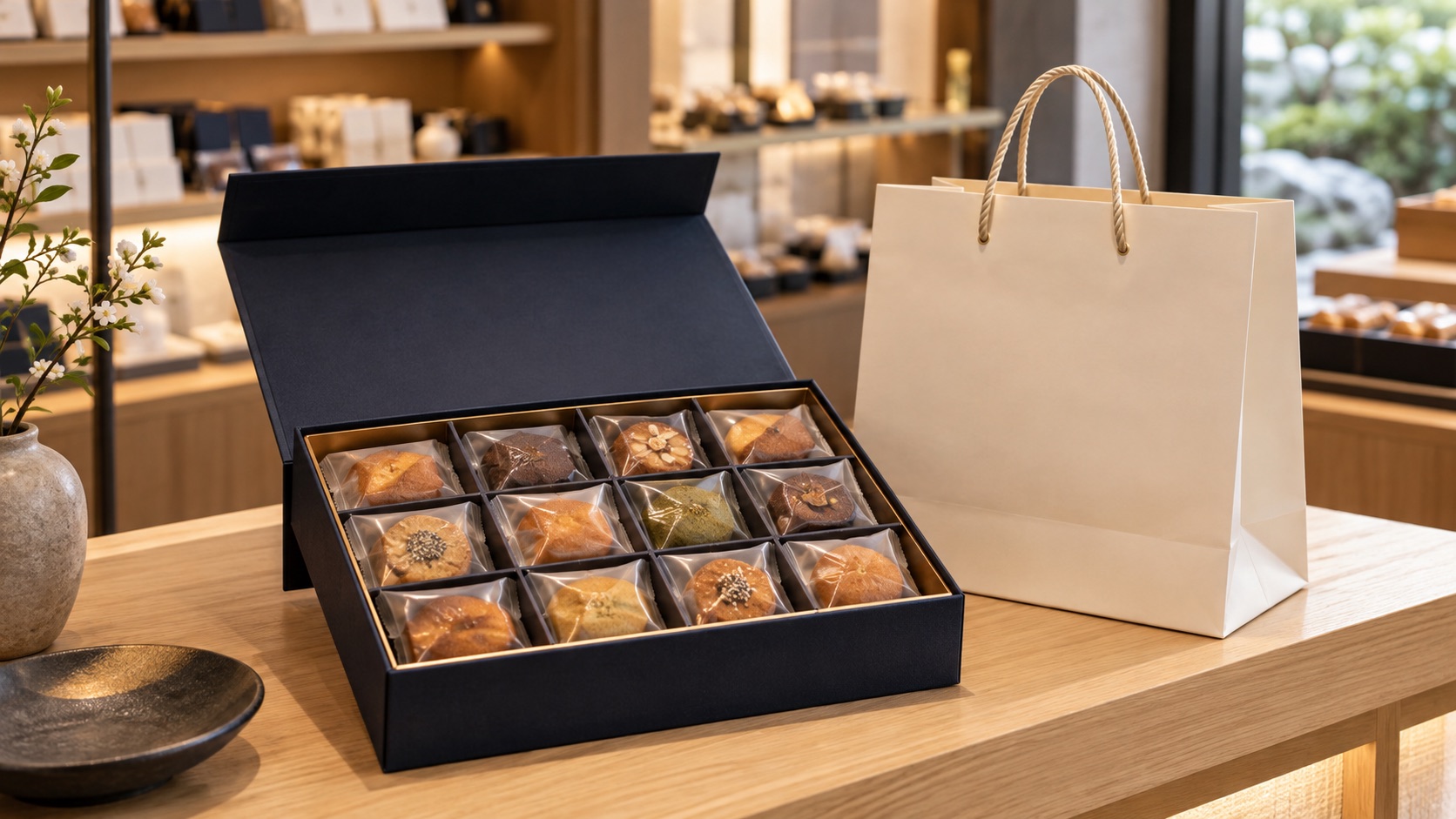
Illustrative image generated with AI.
A delicious product is not automatically an easy gift
Imagine bringing a large, excellent cake to an office. It may require a knife, plates, refrigeration and everyone being available at the same time. Individually wrapped pieces might be easier for that particular occasion.
The point is not that one format is always better. It is that the purchase involves people and practical steps beyond the buyer.
When planning a gift offer for Japan, consider the person ordering, the person carrying and giving it, and the people who will receive it. Sometimes those roles overlap. Their needs still differ.
Care can mean reducing someone else’s work
A familiar concern in gift selection is whether the recipient will be inconvenienced. Can they share it? Must they eat it immediately? Will they need space in a refrigerator?
Mitsukoshi Isetan’s gift recommendations explicitly use individual wrapping, shelf life and room-temperature storage as selection criteria. Japan Post’s guidance also discusses avoiding preparation and storage burdens for recipients. These are practical examples from retailers, not statistics about every Japanese household.
Individual portions can help when colleagues are away from their desks or want to eat later. The business lesson is to make the intended sharing situation easier. It is not a reason to add unnecessary layers of packaging.
Explain shelf life from the customer’s timeline
For a gift, “shelf life from manufacture” may not answer the buyer’s question. They need to consider receiving the order, carrying it to the recipient and the recipient’s opportunity to enjoy it.
Explain the information you can reliably provide: storage requirements, the remaining shelf life customers can expect under the stated conditions, and relevant transport guidance. Avoid presenting an estimate as a guarantee.
A refrigerated product can be appropriate when the recipient is prepared for it. The difficulty arises when the buyer cannot work out the practical arrangements before ordering.
Packaging continues the explanation after the sale
The giver may not remember every detail of a product’s origin or craftsmanship. A short Japanese card can help carry that story to the recipient.
A shipping carton and a presentation box have different jobs. Make it clear whether a carrier bag is included or optional, whether price information is enclosed, and whether the package can be sent directly to the recipient.
Not every gift needs elaborate wrapping. A casual present to a close friend and a formal business thank-you may need different treatment. Cultural relevance is about suitability, rather than applying Japanese motifs to every package.
The right price depends on the relationship
An expensive gift can be welcome, but in some relationships it may make the recipient feel they should reciprocate. A small thank-you and an important celebration need not have the same price or scale.
Organize choices around recognizable uses: a modest thank-you, something to share with colleagues, or a special gift for one person. Do not imply that the most expensive set always expresses the most care.
If you offer services such as noshi gift wrapping, establish the occasions and variations you can handle accurately. It is better to define a useful, limited service than copy unfamiliar customs superficially.
Audit the journey beyond checkout
Try a simple walkthrough: ordering, carrying, handing over, opening, storing and using. Where does uncertainty or extra work appear?
This applies beyond food. Fragrance preferences, clothing sizes and unfamiliar tools can all create gaps between what the giver knows and what the recipient needs.
For a foreign brand, the opportunity is to support the message “I chose this with you in mind.” Presentation, information and practical convenience are part of how that message survives the journey.
About the author
Junko Adachi is the founder and CEO of Anatano PR, a marketing and branding consultancy in Japan. Before founding the company, she worked in marketing at Gucci, Chaumet (part of LVMH) and Yellowfin Japan. She now supports B2C and B2B businesses with marketing and brand development.
Discuss your Japan marketing
Looking for practical support with positioning, customer communication or marketing in Japan? Email info@anatano-pr.com with your company website, product and current challenge. Learn more about Anatano PR and our Japan market support.
Further reading
For the website foundations behind these ideas, see Why Your Japanese Website Isn’t Winning Customers. Explore more Japan Market Insights.
Sources and examples
Mitsukoshi Isetan: selecting gifts to share (Japanese)
Japan Post: choosing gifts with the recipient in mind (Japanese)